Monday, April 14, 2014

Stories that Inspire- Part Two

Continuing my look at stories that inspired me, I turn now to television.  Growing up around TV and movies has definitely affected me as a writer.  It's hard to imagine what my books would have looked like without being bombarded by visual and auditory imagery everywhere I turn, now (with the internet) even more so than ever before.  I greatly admire writers such as Shakespeare, or Jules Verne who dreamed entire worlds from their imagination alone.  Today things are a bit more muddled...

1. Farscape


This cult-followed science fiction show was developed by Brian Henson (Jim Henson's son).  While on TV, it was one of my favorites, and I recently re-watched the entire series with my fiancee Rachel.  The show combines puppetry, computer effects, and extremely creative writing to produce one of the most original shows I've ever seen.  An astronaut is hurled through a wormhole where he befriends a group of escaped alien convicts aboard a living ship.
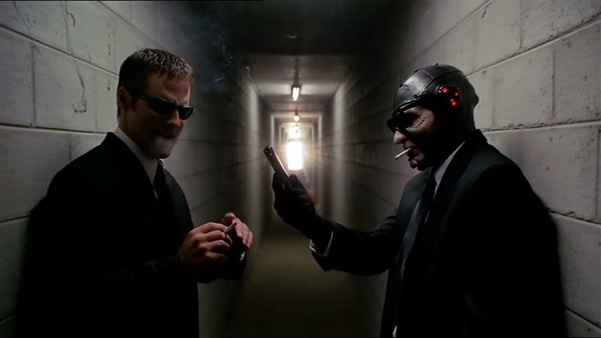


As the series progressed, the writers pushed every boundary, never fearing to break the fourth wall, or even to mock other sci-fi shows.  Many of the episodes focused on what was within the character's minds. Impressively, at the end of the entire series both the protagonist and the antagonist achieve all their goals! That in itself is an extremely rare feat. The biggest inspiration was the idea that our universe is entirely open, anything we dream can exist.  One of my works-in-progress is an adult science fiction novel, and it does begin on a prison ship.


2. Naruto
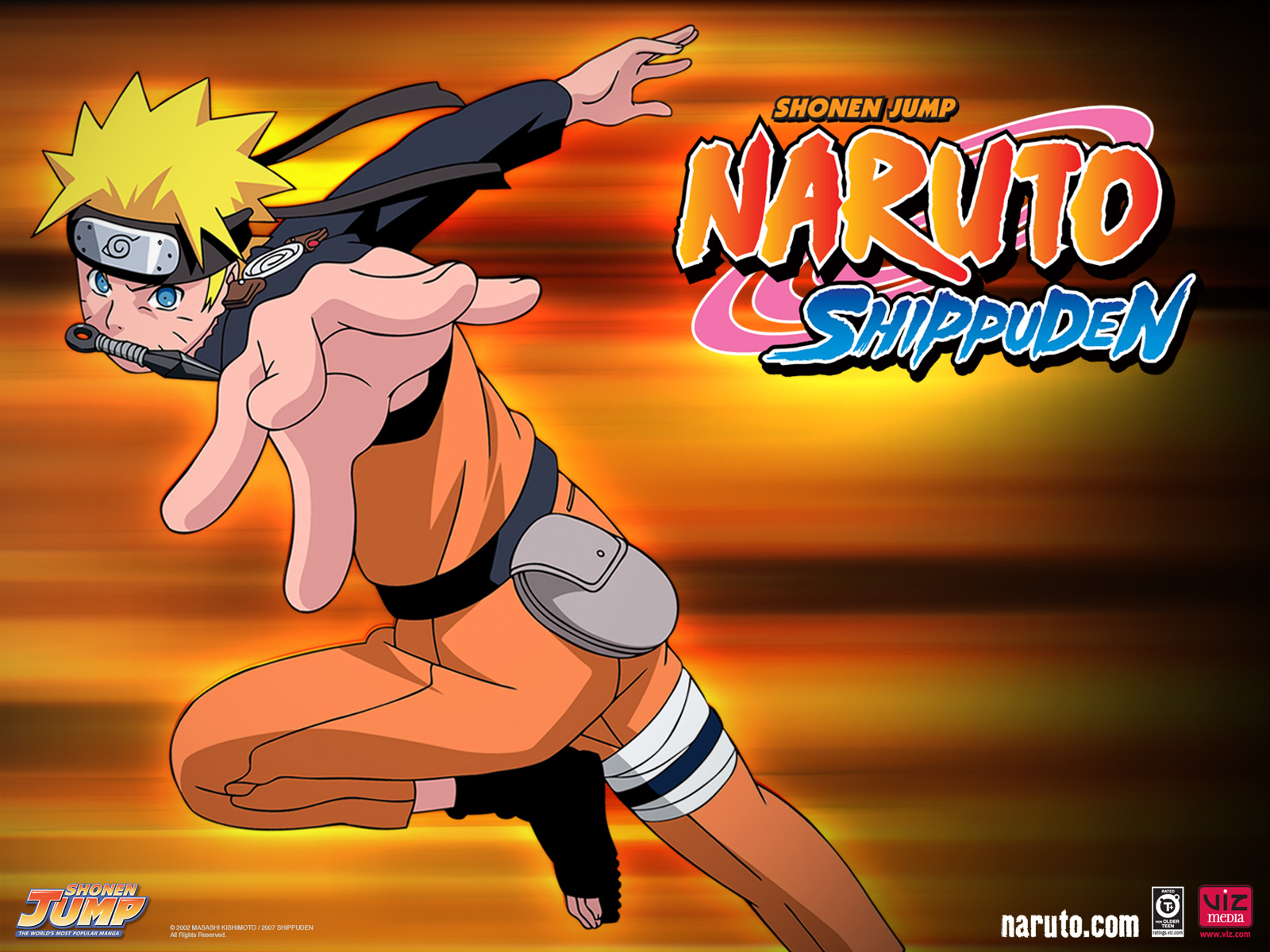


I'm putting this under TV, though I considered doing a separate anime entry.  Naruto is one of the most popular anime/manga series in production with nine motion pictures, hundreds of anime episodes, toys, and a massive merchandising franchise.  For me, the character development in this series is some of the most complex in any show on television.  I've watched both Naruto series (subbed, not dubbed for the true otakus reading this), beginning when I was young myself, and continuing to this day.  Every character in the series is given a wonderfully layered back-story, a goal and a set of obstacles.  The young ninjas develop not just their skills as fighters, but as human beings, coping with life, love, and death.
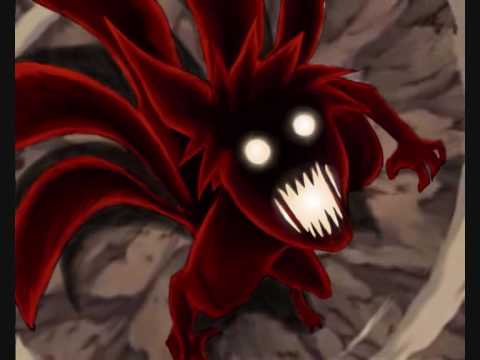

Uzumaki Naruto, the central figure of the anime is a boy who spends his life confronting an inner demon- a nine tailed fox with immense power who was implanted inside Naruto as a child.  This makes Naruto isolated, feared, ridiculed, yet ultimately powerful.  I drew on those themes when crafting School of Deaths.  Suzie is ridiculed and isolated because she is a female, alone in a world of men.  Ultimately, her ridicule turns to courage, when she realizes that being different isn't bad.  

3. Avatar: the Last Airbender


The movie was terrible, and completely let me down.  However, the television series, which some have called "American Anime" was brilliantly crafted and extremely inventive.  For any adult who insists that children's shows cannot have good writing (and admittedly they often do not), I recommend watching this series.  While the character development isn't as detailed as a series like Naruto, the world-building is masterfully done.


In School of Deaths, there is a race enslaved by the Deaths called Elementals or 'Mentals for short.  Each has an ability to manipulate an element.  This idea was directly inspired by Avatar, where different nations "bend" different elements in nature.  In my story, I expand the principle beyond the four elements of nature, to include things such as thought.  As I work on the sequel to School of Deaths, the role of 'Mentals in the Word of the Dead is one of the most vital questions to the series as a whole.

Don't forget to pre-order SCHOOL OF DEATHS!


or

Monday, April 7, 2014

Stories that Inspire - Part One

The act of publishing is circular. For me, the process began after completing the novel and editing it many times. I then queried agents and publishers.  The querying phase is exhausting. I sent small samples (sometimes a single paragraph query letter) to agents, looking for representation. 99.9% of all queries are rejections- either the agent/publisher never answers, or they send a polite note back saying no.  Some wrote back and asked for the novel, but then decided it wasn't for them.  Eventually two publishers said yes, and I chose MuseitUp. Now, the book is preparing for release, and I feel like I am back at the first stage again.  Instead of querying agents or publishers, I am querying bloggers and reviewers.  So far, five have agreed to review the book before release, yet the feeling is similar to the frustration of querying at the beginning of this process.

Another query...  D'oh!
While reading the blogs of potential reviewers, I've noticed how many others talk about the stories that shaped them as both readers and writers. One of the people who signed up for my newsletter (note: sign up for the monthly newsletter before April 14th and be automatically entered to win a 20 dollar Amazon Gift Card. Details at www.ChristopherMannino.com/extras or sign up on the sidebar at right) asked if my students inspire my stories. The answer is "sort of".  To be honest, many of my stories were created before I started teaching.  School of Deaths was finished before I set foot in my current job, yet interacting with kids on a daily basis has certainly shaped my writing and how I view kids and their reactions.

One thing that has undoubtedly affected me as a writer is stories I've read, watched, performed in, or otherwise encountered throughout my life. Towards that end, my next several posts will be a reflection on some of my favorite stories and how they inspired me.

PART ONE: THE STAGE

I am a full-time theatre teacher, and have been involved with theatre onstage and off since I was ten.  Writing and theatre are my two greatest passions in life.  It is natural to start a discussion of stories that have inspired me by talking about theatre that has inspired.

Man of La Mancha by Wasserman, Darion, and Leigh


When I was a sophomore in high school, I was cast as the understudy for Don Quixote in Man of La Mancha. It was the closest I'd ever been to playing an actual lead in a musical (at that point), an it was a musical I enjoyed a great deal. I was allowed to perform the role in a single performance, not even open to the public, yet it was one of the highlights of my high school career, and probably the beginning of my current career path, since I am back at the high school level, giving new students the opportunity to experience the joys I did.  The story itself is also motivational. Quixote is a dreamer, an idealist. He lives with one foot in reality, and one foot in his own fantasy. It is his "quest" to constantly strive towards his own fantasies, his own lofty dreams.  From an early age, living with a foot in my own daydreams was something I was accustomed to.  Striving towards making those dreams is a goal Quixote helped inspire, and now with the publication of my first fantasy novel I really have "reached the impossible star."

Wicked by Schwartz and Holzman


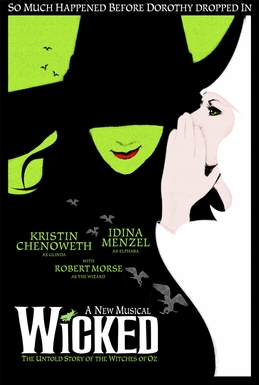
One of my favorite musicals (and no, I haven't read the book it's based on), Wicked helped inspire me as a writer.  The writing, and how everything comes together is brilliant.  Add this to a thrilling and wonderful score, and an amazing set, and of course you have an incredible musical.  I first saw Wicked in London, then saw it on Broadway with Rachel for our one-year anniversary as a couple.  While writing School of Deaths I'd play the soundtrack, imagining Suzie struggling at the College of Deaths, while Billy told her to simply try "Dancing Through Life."  One of the characters in the novel, named Athanasius, was even given a goat-like physical appearance directly inspired by Dr. Dillamond.  

Elphaba and Dillamond- Original Broadway Cast

Matilda: the Musical by Minchin and Kelly


When I saw Matilda, I posted on this blog that it was one of the best new shows I've seen (original post here).  Like Wicked, this was a soundtrack I played while writing my first drafts of School of Deaths.  I had read Dahl's book as a child, and the thing that thrilled me about the character Matilda was her love of books and reading.  When I went to the RSC production in London and saw thousands of letter tiles exploding outward to form one of the best sets I've seen- I remembered how much Matilda liked to read.  It reminded me of another child who always dove headfirst into books, and would spend entire summers devouring bookshelf after bookshelf. That child, of course, was me.  One of the most important locations in School of Deaths, as well as the current novel I'm working on (a sequel called Sword of Deaths) is a library.  It may seem redundant to emphasize reading within the pages of a book- but as fewer and fewer children read for pleasure (an unfortunate trend), where better to encourage reading than within a book?

Those three stories definitely helped inspire me.  Next week, I'll examine different stories.

Don't forget that School of Deaths is available for pre-order now if you visit MuseitUp's website here.  This past Saturday, I spent 3 and half hours filming a trailer (to be released later this month).  This is a teaser (not the full trailer)


Monday, March 31, 2014

School of Deaths

Last Friday, I finished my galley review and sent it to the publisher.  The very next day, my book went live on MuseItUp's website, now available for pre-order.


Thirteen-year-old Suzie Sarnio always believed the Grim Reaper was a fairy tale image of a skeleton with a scythe. 

Now, forced to enter the College of Deaths, she finds herself training to bring souls from the Living World to the Hereafter. The task is demanding enough, but as the only female in the all-male College, she quickly becomes a target. Attacked by both classmates and strangers, Suzie is alone in a world where even her teachers want her to fail.Caught in the middle of a plot to overthrow the World of Deaths, Suzie must uncover the reason she’s been brought there: the first female Death in a million years.

Please click here to read a sample section, or to pre-order

Also visit my main site www.ChristopherMannino.com for extras and more information.  

Monday, March 24, 2014

Santa Muerte

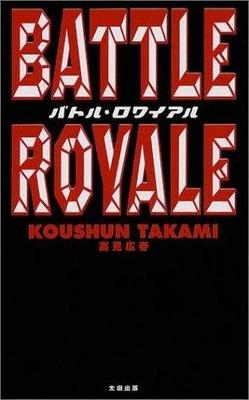
One concern every artist has at some point is on originality.  No one wants to copy another's ideas.  I remember reading an article about how Suzanne Collins received criticism when The Hunger Games was released, claiming that she had copied the idea from a previously released Japanese manga story called Battle Royale.  Apparently the two stories had almost identical plots, and much of the imagery was repeated between the two concepts.  Collins denied ever hearing about Battle Royale before her publication.


Authors, and indeed all artists, begin a creative process.  They may be influenced by other ideas, but no one (unless writing "fan fiction") wants to copy someone else's world.  When I was writing School of Deaths, I honestly believed that the idea of a female Death was completely original.  The reason I made her female, as discussed in previous posts, was to increase her isolation.  My original concept was simply a school that trained reapers.  Although I had never read or experienced either, both ideas exist independently of my novel.


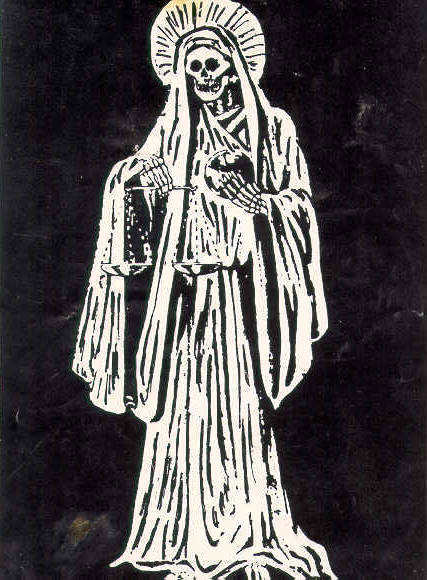
I learned last week about Santa Muerte.  The idea of a female Death actually dates to the 1700s, when Catholic traditions in South America blended with meso-American cultures to produce a folk saint "Our Lady of Death" or "Saint Death".  Santa Muerte is a female Grim Reaper.  Unlike Suzie, she is not a kid, and does not train to be a Death.  In fact, she is essentially the same as the traditional image of the Grim Reaper, only female.


I first learned about Santa Muerte as part of a report on illegal drug trades in Mexico.  This is the most depressing revelation of all.  Suzie Sarnio is a female Death who represents hope to young people.  She overcomes sexism, and becomes a leader in a world where she's hated.  Santa Muerte, perhaps the earliest imagery of a female Death, has associations with every negative aspect I wished to avoid.  

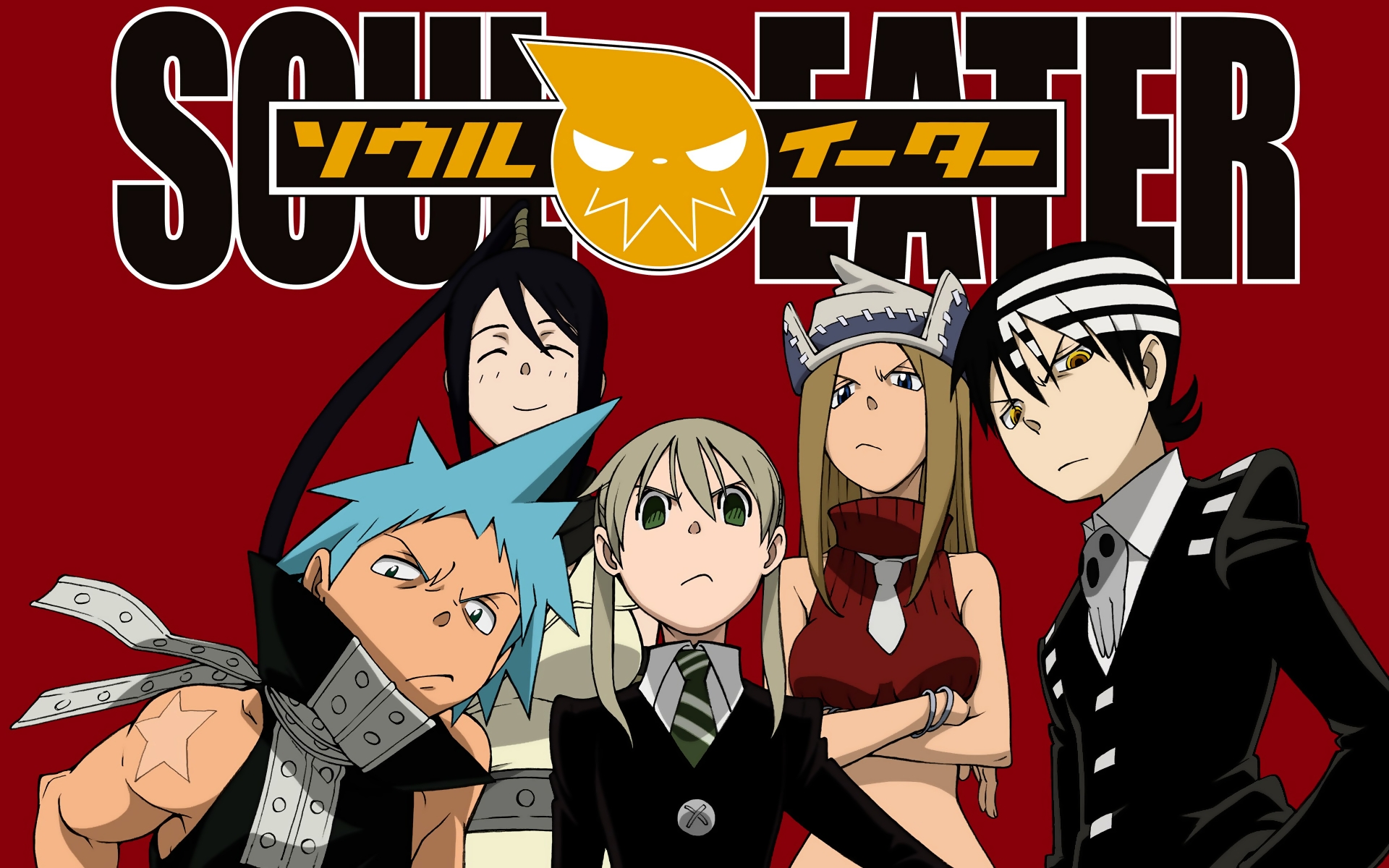
At the same time, even my School of Deaths, where Deaths are trained, has echoes of other ideas.  Last summer, long after the novel was finished and the publishing contract signed, I learned about a Japanese manga series called Soul Eater.  I watched the entire series, which is markedly different than my novel, but at its base does feature kids training to be Reapers.  


I now had to ask the question, is anything original?  I developed my ideas on my own, and the story itself is unique, but the themes all exist elsewhere- some dating back centuries.  Joseph Campbell is famous for postulating that all ideas emerge from a single "monomyth" deeply rooted in human consciousness.  If every story is in some ways a retelling of the same central ideas, where does originality factor in?

The answer, I believe, is in the construction of a novel, which is the true art.  I am currently reviewing my final galley version for School of Deaths, and have been writing a second novel as well.  Now that I've discovered that similar ideas exist elsewhere, am I changing mine?  No.  The novel I've written is still an original work, the character and their situations completely unlike anything I've ever experienced or heard of elsewhere.  Perhaps, at the base of our souls, there really is a single complex of "monomyths" from which all stories emerge.  Yet, it's the way we interpret and transform those myths that truly makes us artists.  

Monday, March 17, 2014

Chutes and Ladders: Part Two


In my last post, I discussed the role of chance in our everyday lives.  Today, I look at the role of chance in writing.

Today is St. Patrick's day.  I remember as a kid, looking through our yard for a four-leaf clover.  I never found it.  When I was in kindergarten, my mother pointed to a rainbow in the sky, and told my brother and I that we'd go look for the pot of the gold at it's end.  We jumped in the car, full of excitement, but never seemed to catch the end of that magical arc of colors.  How many people look for a little token of control- something to change the roll of fate's dice in their lives, and reduce the amount of chance?
However, whether you believe entirely in chance or not, there's one arena where chance needs to be both absent and always-present: fiction. Perhaps the only place where there is no chance, no fate, and no luck at all is within the world of fiction.  Getting published, or making lots of sales- that's a different matter.  I'm referring to the world of the novel itself.    
Like most authors, I started my novel with an abstract idea.  This led to a rough outline, then a first, second, and third draft...  eventually to line edits, content edits, and currently a galley review.  There isn't a word in my novel that's in there by chance.  There's not a single thought that hasn't been evaluated and studied, not just by me, but by my early readers, my editors, and my publisher.  This novel, and indeed all novels, is meticulously planned out.  However, it still needs to give the illusion of chance.  I need my readers to believe that some of the events happening to the characters are random.  If you want a storm to blow over your setting, for example, that storm needs to appear from nowhere.  Or perhaps a character dies randomly- it happens in both real life and fiction, the difference is that fiction only appears random.

One of the clearest examples occurred in a TV program I enjoy: Downton Abbey.  In the finale of Season 3, the authors of this popular drama set up an idyllic vision.  Matthew and Mary were finally united, after overcoming every obstacle imaginable.  Then, in the final minutes of the episode, Matthew suddenly died in a car crash.  Everything was perfect, and one heartbeat later, everything's misery. This takes careful planning to pull off successfully, yet if done properly it shows chance in a world where nothing happens by chance.


The method employed by Donwton works well in fiction as well.  Engage the audience's attention thoroughly in the opposite direction you intend to take them.  Then throw your curveball.  If you truly want an event to seem random, avoid foreshadowing it, or keep foreshadowing to a minimum.  You, the author, know what's around the corner, but you want the reader staring staring straight down the road.  That way, when your plot twist comes leaping out, the reader is blindsided and thinks its purely chance.  Keep in mind, however, that not every event is chance, even in your novel.  Just like in reality, if there's an internal choice, it still should follow the character's rationale.

That's my thoughts on chance.  I also have some major news for my novel.  The cover is out, and I have a release date of May 2nd.


In preparation for this release, I have written a short story set two years before the novel.  SHADOW OF THE SCYTHE- the story of a French boy brought to the World of Deaths.  Download a FREE copy of Shadow of the Scythe at my website:  http://www.christophermannino.com/free-reads.html

On a final note, if you enjoy chance- you now have an exciting chance to win a FREE copy of my upcoming novel School of Deaths (the full novel).  This sweepstakes runs through April 1st.  

Monday, March 10, 2014

Chutes and Ladders: Part One

There's a game my brother and I used to play as kids, called the Game of Life.


In this game, you spin a dial to determine how quickly you progress through certain life phases, such as college, marriage, and childrearing.  I haven't played it since I was about seven, and honestly don't remember the game too much, but it brings to mind a serious question: how much of life is purely chance.  In the end, is there some sort of cosmic force spinning a dial, or do we really determine our own fates.  This blog post on the element of chance will come in two parts (over two weeks), and this part will focus on chance in life.

I really began thinking of chance recently, after listening to an NPR study on how chance affects art.

The story can be heard here:
http://www.npr.org/2014/02/27/282939233/good-art-is-popular-because-its-good-right
Ultimately, the idea discussed is that art popularity (including writing) may be governed in very large part by chance and coincidence.  For a writer, this is discouraging.  Yet, I started to wonder.  Is art the only element affected by chance, or is life itself an enormous roll of the dice?  I've never been too sure of fate or destiny, but is the opposite possible?


This past summer, I played the game Chutes and Ladders with a camp student I was working with.  It was the first time I'd played as an adult.  My initial reaction was this game is utterly stupid. I mean, really, I'm rolling a die, and don't make a single choice.  The die roll decides if I climb a ladder of success or come tumbling down a chute of despair.  I peddle along this path, experiencing life's greatest joys and sorrows without any semblance of control, and at the end someone wins.  Is that all life's about??

And yet, what if life really is entirely up to chance?  Sometimes lately, I've wondered.  My life has mostly been joys.  I've achieved all of my dreams.  I'm teaching in a job I love, my first novel will be released soon, and I'm marrying my soul mate.  Still, those chutes keep appearing.  Rachel's cousin Courtney died last weekend.  Courtney was only 17, yet died possibly from drugs.  At the same time, John (mentioned last post) remains in critical condition in the hospital, and even today one of my other students was taken out of school in an ambulance.

Is there someone up above rolling a die, and pushing me across spaces on the board?


I believe that life is a blend of chance and choice.  Yet, the truly important thing is not what happens, but how we react.  Despite calamity, focusing on future joys (the "ladders" on the way) keeps us optimistic, and helps us move past the occasional disappointments.  Next week, I will discuss adding chance to something deeply planned out: a novel....

Monday, March 3, 2014

Crises- Part Two

A couple months ago, I wrote about teens and dealing with crisis.  The original post can be found here.

I hadn't planned to return to this subject, but last Sunday (Feb 23) I received terrible news.  The worst part of being a teacher is learning that something bad has happened to a student you care about.

John is a great student.  He is full of energy and enthusiasm, and always smiled.  He was a leader on the school improv team, a rising leader in the drama department, and was one of two students who signed up to be a student aide for me next year.  While riding his bicycle (with a helmet), John was struck by a car.  He has been in three hospitals since then, and has still not regained consciousness.  The latest prognosis indicates that there is a chance he might never regain full use of his arms and legs.  

This tragedy has shaken my program, especially myself.  In my last post I mentioned how teens sometimes dealt with crises in surprising ways, often by hiding their true feelings.  This issue seems to have hit closer to home with them, and in a way the roles have been reversed.  I have to channel my emotions and stay positive, while many of the students are more visibly distraught.  The improv team put on a show last Thursday to help raise money for John's family.  It was moving to watch.  

Perhaps this crisis hurt more students because they knew John so well.  Perhaps it reminds us of the fragility of life.  How the students continue to deal with crises shows me how strong they are, and reminds me of how strong I must be as well.