Showing posts with label Writing. Show all posts

Monday, June 22, 2015

Magic in Nature

As an author of speculative fiction, I constantly imagine and dream of new worlds. Magic is something fun to write about, and to envision. Yet, occasionally I encounter something in nature that is more magical than anything I've dreamed. Such sights fuel imagination, stirring creativity to new levels.


Last week, I was walking my dog at twilight. There is a huge tree behind my yard, which stood silhouetted against the rapidly dusking sky. As I watched, the entire tree sparkled. Hundreds of fireflies swarmed around every branch, shining for a moment, before darting somewhere new. My camera was inside, and even my phone was charging (the pic above isn't the tree, I borrowed a different pic from the internet). With no way to record such an image, I simply stared. Glowing dots dancing and flying around a shadowy mass of tangled branches. Fairies flying around a giant? Magic sparkling around a void?

I looked at the top of the tree, and saw something spewing from the tree's crown. I thought, perhaps, the tree was smoking. These tiny sparks flew upward, with clouds of smoke wafting away. After a moment of confusion, I realized what the dark swirls were. Dozens and dozens of bats circled the tree, perhaps planning to eat some of the fireflies. The effect was pure magic. Sparkles below, a shadow behind, and waves of winged smoke circling above. 

When I returned inside, I instantly dove into my writing.

What sights in nature have inspired you lately?

Monday, February 2, 2015

Are Writers Timelords?

Last June, I wrote a blog piece comparing writers to Voldemort, the notorious villain of the Harry Potter novels. That blog can be found HERE.

Today, I look at an equally possible, and similarly nerdy connection: are writers actually timelords?


Timelords are a group of aliens featured in the BBC sci-fi show Doctor Who. The protagonist of the long-lived series is a timelord himself, constantly helping humans. Timelords come from a planet called Gallifrey, and are an ancient and very tech-savvy race. They have only one real "superpower," which is the ability to regenerate, instantly healing themselves and turning into a new person (allowing for multiple actors to play a single role). 


Aside from their ability to regenerate, and their two hearts, timelords are basically just like people. Their name derives from their ability to go anywhere in the universe and to any time, using a device called a TARDIS (Time And Relative Dimension In Space), which is a fancy box that can bring you anywhere. As I said, very tech-savvy. 

So how do writers fit in?

Well, let's start with the timelords' ability to heal and regenerate. Every writer has faced rejection. A traditionally published author has about as much chance of success as you have of becoming a world-famous Hollywood actor, maybe even less. Yes, there are new options now, like self-publishing. But for those who go the traditional route, as I did, rejection comes swiftly. Each agent or publisher who turns you down, sometimes after only reading a two paragraph blurb, hurts your pride. An author who can't heal himself, allowing a new face to come forward, won't succeed.


And let's not forget the writer's TARDIS. Timelords can go anywhere or to any time. They've got a box that brings them places. Well writers have a box as well. In fact, I'm typing on my box right now. This magic box allows me to explore any place in space or time, or even places that only previously existed in my imagination. In fact, writers are perhaps more powerful than timelords- since a writer is limited only by the margins of his or her imagination. 

Writers show us the world, sometimes to give us an escape, sometimes to help change things. Our motivations are identical to the Doctor's motives. What writer doesn't want to grab their readers in the night, and whisk them away on an amazing adventure? Something funny, but dark; incredible, yet honest.  


And let's not forget that writers have a lot of heart. Maybe even two hearts...


Each story I write is a new adventure, a new journey. Each time I face disappointment, I throw on a new face, and heal myself. And the power of my imagination, keeps plugging away at this magic little box, a box that can take me anywhere...


Monday, June 30, 2014

Playwriting vs Novel writing

Today I'd like to talk a bit about the differences between writing plays and writing novels. I don't think either one is easier than the other, and there are some things to keep in mind if you try to switch from writing one to the other.

Difference one: Directing

With a novel, you are the director.  When you sit down to write the story, you control everything. If you want a character to do, feel, think, or act in a certain way- they do. You push the pen (or keyboard) and the character jumps. You even control how they look, smell, talk, and so on.  A novelist is more than a director, they're the god of their world, pulling every string to weave the tapestry of their story.  Many claim they let the characters "tell them" what to do as they write, but whether consciously or not, it's still all in the author's hands.  Even an editor who steps in to mention things that need tweaking, ultimately gives it back to the author to tweak.  John Doe might need to scream, running away from a burning building in a scene, but won't until the author orders him to.

On the other hand, a playwright might have an idea of how a play should look, but ultimately they will probably not direct it.  Yes, some playwrights direct their own scripts, but eventually that script should leave the playwrights' hands.  Theatre is an organic art, created by groups instead of individuals.  A playwright creates a situation and dialogue, but it's a director who interprets that dialogue, and actors and designers who bring the interpretation to life.  One thing I constantly remind my playwriting students is to avoid drafting too many stage directions, as blocking is the job of others.  If John Doe says help, the word comes from the playwright. The choice to scream for help comes from the actor. Screaming for help while sprinting across stage comes from the director's blocking, and the burning building collapsing overhead comes from the director, designer, and stage hands.  The words belong to the playwright, but the theatrical presentation comes from a group effort, not an individual.  For many authors used to total control over a world, this is intimidating.  Novel writing involves growing a garden, picking the vegetables, and cooking a meal. Playwriting is planting seeds and watering, trusting others to harvest.

Difference two: senses

People have five senses.  One advantage of novelists is the ability to create a world that touches all five senses.  Bob walked to the store with the red awning, basking in the warm sunlight. He sat, smelling the fresh sesame bagels. Taking a bite, he heard a dog bark behind him.  Characters experience all five senses, and details incorporating all of the senses help to create a more vivid and realistic world.  Not only can all senses be described, but internal reactions can accompany a sense.  I pulled the fork to my lips and gagged, revolted at the bitter taste.  

However, all of the above is an illusion.  In reality, books only enter a reader's mind through ONE sense. Every sense mentioned above traveled to your brain through sight.  If you're listening to an audio book, you only hear the words and nothing else.  In theatre, we use a combination of visual and auditory stimulation simultaneously.  You hear and see everything happening onstage.  Experimental theatre pushes the boundaries of sensory experience even further.  Here in Washington DC, the theatre troupe "Dog and Pony" uses a blend of audience interaction, tactile objects, and a pre-show buffet styled after the production, to engage every sense. In their show Beertown, for example, the townsfolk enjoy an assortment of desserts and dishes, while talking to the dignitaries of the town (actors) about a series of objects to be voted on as part of the interactive show.  No author could fully engage his audience more thoroughly, no matter how many senses were written about.  Even in traditional theatre, the actors themselves can experience the world of the play through sight, sound, touch, and sometimes smell and taste.  In a production of Inherit the Wind, I had deliver a monologue between bites of fried chicken.  My reality of the story was heightened, in turn heightening it for the audience.     

Difference three: the bubble

The final difference I'll discuss lies in the process of creation itself.  Writing books, for most authors, is a solitary business.  There might be research or collaborative discussions in a writing group, but ultimately the author lives in a bubble, dreaming of his or her world.  Many authors cannot ave any distractions, and can only write when the walls of this bubble are thickest.

To be fair, there are some playwrights who write the same way. They sit in isolation, crafting dialogue and imagining a vision for the stage.  Yet, since theatre is an organic art, created by groups instead of individuals, many plays take shape in group settings.  If you're writing a musical, you work with a composer and librettist to craft a work.  Other pieces are based on a collaboration between you and and ensemble.  When I met Rachel, she worked at Woolly Mammoth Theatre Company, a space devoted to only premiering and workshopping new plays.  After every premiere, the producer, playwright, and director all came out and asked the audience what elements worked and didn't work.  In a way, the audience played a role in editing and drafting the final version of the production.  Other plays are more collaborative from the beginning.  Director/playwright Mary Zimmerman made a name for herself by watching her theatre troupe improvise based on a situation, and then crafting dialogue based on the improvisations.  In those situations the playwright has no bubble at all.

What are your thoughts?  Have you considered switching from novels to plays?

Monday, June 16, 2014

Are Writers Like Voldemort?

Two recent reviews compared School of Deaths to the Harry Potter series. I decided to play on that a bit with this question: are writers like Voldemort?


I say YES.

The first similarity is that both writers and Voldemort use magic.  Voldemort's magic mostly involves torturing and killing people.  He seems especially obsessed with a teenage boy, and finds ways to get into the boy's mind.  A writer also uses magic.  Writers use a group of arcane symbols arranged into clumps they call words.  Like a spell, they can take an image, something that only exists as a slight fancy in their imagination, and dump it into the imaination of their reader.  As I type, an elephant walked in front of my window stinking of manure.  Did you picture an elephant, or smell manure?  What if I then told you there was no elephant?  That transference is the most real form of magic imaginable....

"Writing is magic." - Stephen King, On Writing


Another striking similarity is in what both writers and Voldemort want: eternal life.  Voldemort is obsessed with the idea of immortality.  He kills people to create horcruxes, ironially causing his own downfall and death, when one of the horcruxes fights back.  Writers are no different.  It's true that many might simply want to share their ideas, but in the end, by creating stories that will endure, a writer has taken part of their soul and created something eternal: a part of their soul that can be shared in another's mind, and could last forever.  Sounds a lot like making horcruxes- only without all the murders.  


So what do you think?  Are writers like Voldemort?

Also, don't miss this stellar new review for School of Deaths:  http://forums.onlinebookclub.org/viewtopic.php?f=21&t=20235


Monday, April 7, 2014

Stories that Inspire - Part One

The act of publishing is circular. For me, the process began after completing the novel and editing it many times. I then queried agents and publishers.  The querying phase is exhausting. I sent small samples (sometimes a single paragraph query letter) to agents, looking for representation. 99.9% of all queries are rejections- either the agent/publisher never answers, or they send a polite note back saying no.  Some wrote back and asked for the novel, but then decided it wasn't for them.  Eventually two publishers said yes, and I chose MuseitUp. Now, the book is preparing for release, and I feel like I am back at the first stage again.  Instead of querying agents or publishers, I am querying bloggers and reviewers.  So far, five have agreed to review the book before release, yet the feeling is similar to the frustration of querying at the beginning of this process.

Another query...  D'oh!
While reading the blogs of potential reviewers, I've noticed how many others talk about the stories that shaped them as both readers and writers. One of the people who signed up for my newsletter (note: sign up for the monthly newsletter before April 14th and be automatically entered to win a 20 dollar Amazon Gift Card. Details at www.ChristopherMannino.com/extras or sign up on the sidebar at right) asked if my students inspire my stories. The answer is "sort of".  To be honest, many of my stories were created before I started teaching.  School of Deaths was finished before I set foot in my current job, yet interacting with kids on a daily basis has certainly shaped my writing and how I view kids and their reactions.

One thing that has undoubtedly affected me as a writer is stories I've read, watched, performed in, or otherwise encountered throughout my life. Towards that end, my next several posts will be a reflection on some of my favorite stories and how they inspired me.

PART ONE: THE STAGE

I am a full-time theatre teacher, and have been involved with theatre onstage and off since I was ten.  Writing and theatre are my two greatest passions in life.  It is natural to start a discussion of stories that have inspired me by talking about theatre that has inspired.

Man of La Mancha by Wasserman, Darion, and Leigh


When I was a sophomore in high school, I was cast as the understudy for Don Quixote in Man of La Mancha. It was the closest I'd ever been to playing an actual lead in a musical (at that point), an it was a musical I enjoyed a great deal. I was allowed to perform the role in a single performance, not even open to the public, yet it was one of the highlights of my high school career, and probably the beginning of my current career path, since I am back at the high school level, giving new students the opportunity to experience the joys I did.  The story itself is also motivational. Quixote is a dreamer, an idealist. He lives with one foot in reality, and one foot in his own fantasy. It is his "quest" to constantly strive towards his own fantasies, his own lofty dreams.  From an early age, living with a foot in my own daydreams was something I was accustomed to.  Striving towards making those dreams is a goal Quixote helped inspire, and now with the publication of my first fantasy novel I really have "reached the impossible star."

Wicked by Schwartz and Holzman


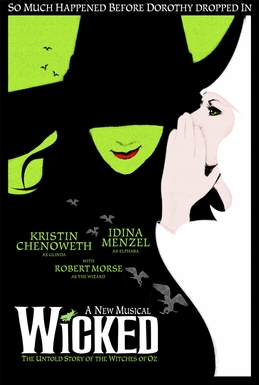
One of my favorite musicals (and no, I haven't read the book it's based on), Wicked helped inspire me as a writer.  The writing, and how everything comes together is brilliant.  Add this to a thrilling and wonderful score, and an amazing set, and of course you have an incredible musical.  I first saw Wicked in London, then saw it on Broadway with Rachel for our one-year anniversary as a couple.  While writing School of Deaths I'd play the soundtrack, imagining Suzie struggling at the College of Deaths, while Billy told her to simply try "Dancing Through Life."  One of the characters in the novel, named Athanasius, was even given a goat-like physical appearance directly inspired by Dr. Dillamond.  

Elphaba and Dillamond- Original Broadway Cast

Matilda: the Musical by Minchin and Kelly


When I saw Matilda, I posted on this blog that it was one of the best new shows I've seen (original post here).  Like Wicked, this was a soundtrack I played while writing my first drafts of School of Deaths.  I had read Dahl's book as a child, and the thing that thrilled me about the character Matilda was her love of books and reading.  When I went to the RSC production in London and saw thousands of letter tiles exploding outward to form one of the best sets I've seen- I remembered how much Matilda liked to read.  It reminded me of another child who always dove headfirst into books, and would spend entire summers devouring bookshelf after bookshelf. That child, of course, was me.  One of the most important locations in School of Deaths, as well as the current novel I'm working on (a sequel called Sword of Deaths) is a library.  It may seem redundant to emphasize reading within the pages of a book- but as fewer and fewer children read for pleasure (an unfortunate trend), where better to encourage reading than within a book?

Those three stories definitely helped inspire me.  Next week, I'll examine different stories.

Don't forget that School of Deaths is available for pre-order now if you visit MuseitUp's website here.  This past Saturday, I spent 3 and half hours filming a trailer (to be released later this month).  This is a teaser (not the full trailer)


Monday, March 24, 2014

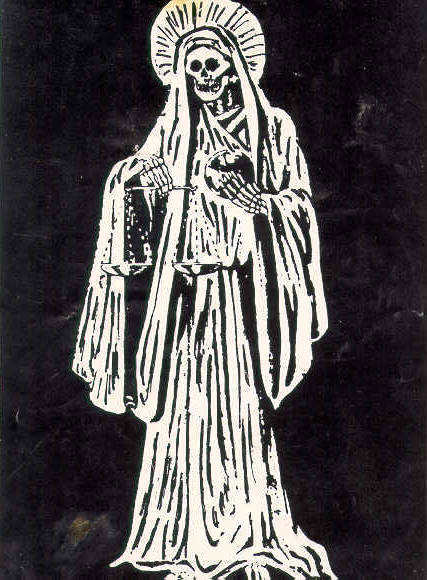
Santa Muerte

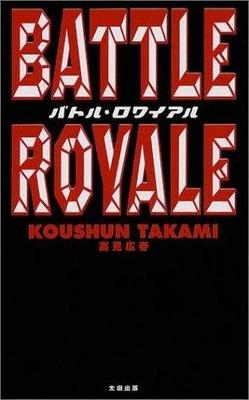
One concern every artist has at some point is on originality.  No one wants to copy another's ideas.  I remember reading an article about how Suzanne Collins received criticism when The Hunger Games was released, claiming that she had copied the idea from a previously released Japanese manga story called Battle Royale.  Apparently the two stories had almost identical plots, and much of the imagery was repeated between the two concepts.  Collins denied ever hearing about Battle Royale before her publication.


Authors, and indeed all artists, begin a creative process.  They may be influenced by other ideas, but no one (unless writing "fan fiction") wants to copy someone else's world.  When I was writing School of Deaths, I honestly believed that the idea of a female Death was completely original.  The reason I made her female, as discussed in previous posts, was to increase her isolation.  My original concept was simply a school that trained reapers.  Although I had never read or experienced either, both ideas exist independently of my novel.


I learned last week about Santa Muerte.  The idea of a female Death actually dates to the 1700s, when Catholic traditions in South America blended with meso-American cultures to produce a folk saint "Our Lady of Death" or "Saint Death".  Santa Muerte is a female Grim Reaper.  Unlike Suzie, she is not a kid, and does not train to be a Death.  In fact, she is essentially the same as the traditional image of the Grim Reaper, only female.


I first learned about Santa Muerte as part of a report on illegal drug trades in Mexico.  This is the most depressing revelation of all.  Suzie Sarnio is a female Death who represents hope to young people.  She overcomes sexism, and becomes a leader in a world where she's hated.  Santa Muerte, perhaps the earliest imagery of a female Death, has associations with every negative aspect I wished to avoid.  

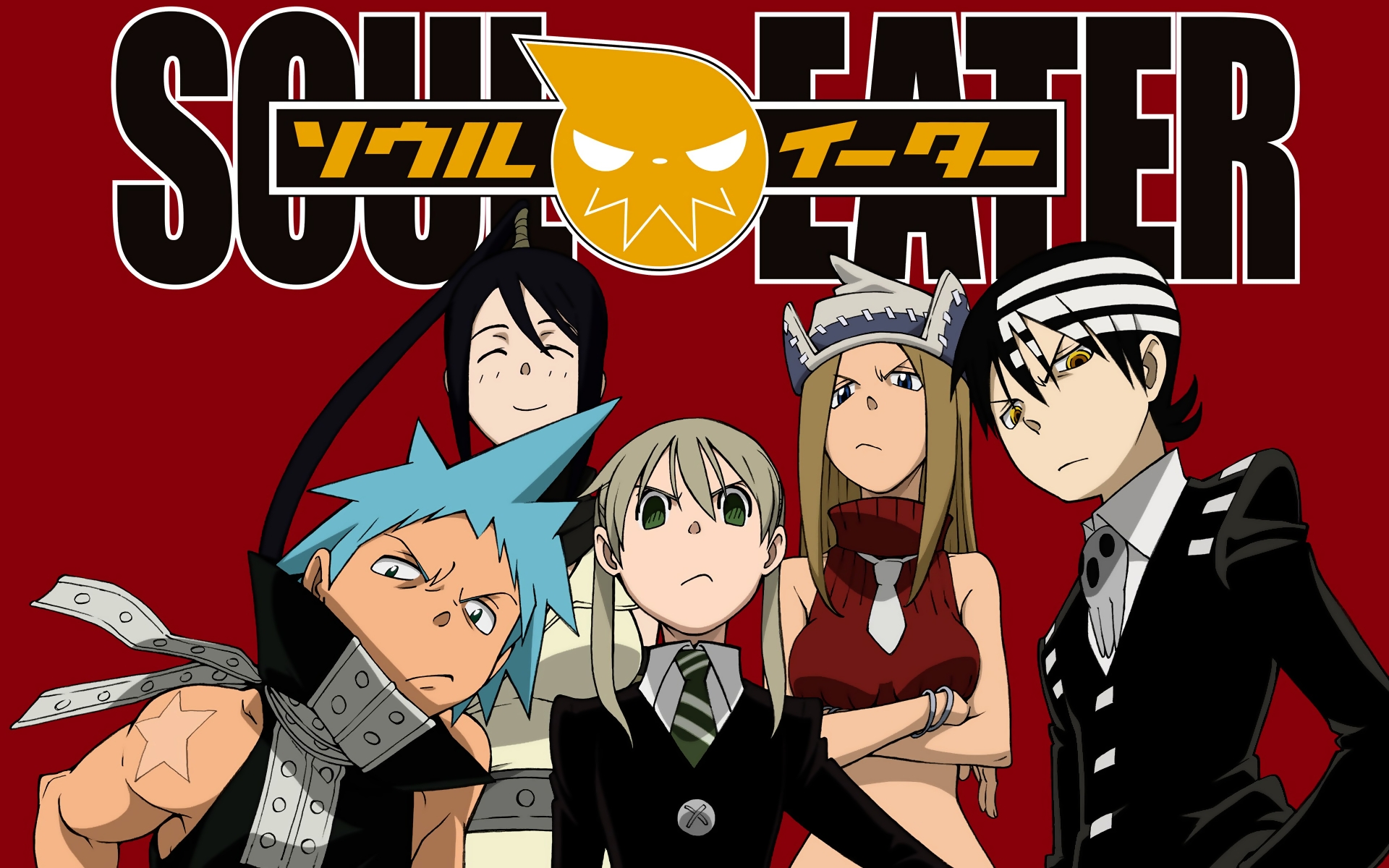
At the same time, even my School of Deaths, where Deaths are trained, has echoes of other ideas.  Last summer, long after the novel was finished and the publishing contract signed, I learned about a Japanese manga series called Soul Eater.  I watched the entire series, which is markedly different than my novel, but at its base does feature kids training to be Reapers.  


I now had to ask the question, is anything original?  I developed my ideas on my own, and the story itself is unique, but the themes all exist elsewhere- some dating back centuries.  Joseph Campbell is famous for postulating that all ideas emerge from a single "monomyth" deeply rooted in human consciousness.  If every story is in some ways a retelling of the same central ideas, where does originality factor in?

The answer, I believe, is in the construction of a novel, which is the true art.  I am currently reviewing my final galley version for School of Deaths, and have been writing a second novel as well.  Now that I've discovered that similar ideas exist elsewhere, am I changing mine?  No.  The novel I've written is still an original work, the character and their situations completely unlike anything I've ever experienced or heard of elsewhere.  Perhaps, at the base of our souls, there really is a single complex of "monomyths" from which all stories emerge.  Yet, it's the way we interpret and transform those myths that truly makes us artists.  

Monday, March 17, 2014

Chutes and Ladders: Part Two


In my last post, I discussed the role of chance in our everyday lives.  Today, I look at the role of chance in writing.

Today is St. Patrick's day.  I remember as a kid, looking through our yard for a four-leaf clover.  I never found it.  When I was in kindergarten, my mother pointed to a rainbow in the sky, and told my brother and I that we'd go look for the pot of the gold at it's end.  We jumped in the car, full of excitement, but never seemed to catch the end of that magical arc of colors.  How many people look for a little token of control- something to change the roll of fate's dice in their lives, and reduce the amount of chance?
However, whether you believe entirely in chance or not, there's one arena where chance needs to be both absent and always-present: fiction. Perhaps the only place where there is no chance, no fate, and no luck at all is within the world of fiction.  Getting published, or making lots of sales- that's a different matter.  I'm referring to the world of the novel itself.    
Like most authors, I started my novel with an abstract idea.  This led to a rough outline, then a first, second, and third draft...  eventually to line edits, content edits, and currently a galley review.  There isn't a word in my novel that's in there by chance.  There's not a single thought that hasn't been evaluated and studied, not just by me, but by my early readers, my editors, and my publisher.  This novel, and indeed all novels, is meticulously planned out.  However, it still needs to give the illusion of chance.  I need my readers to believe that some of the events happening to the characters are random.  If you want a storm to blow over your setting, for example, that storm needs to appear from nowhere.  Or perhaps a character dies randomly- it happens in both real life and fiction, the difference is that fiction only appears random.

One of the clearest examples occurred in a TV program I enjoy: Downton Abbey.  In the finale of Season 3, the authors of this popular drama set up an idyllic vision.  Matthew and Mary were finally united, after overcoming every obstacle imaginable.  Then, in the final minutes of the episode, Matthew suddenly died in a car crash.  Everything was perfect, and one heartbeat later, everything's misery. This takes careful planning to pull off successfully, yet if done properly it shows chance in a world where nothing happens by chance.


The method employed by Donwton works well in fiction as well.  Engage the audience's attention thoroughly in the opposite direction you intend to take them.  Then throw your curveball.  If you truly want an event to seem random, avoid foreshadowing it, or keep foreshadowing to a minimum.  You, the author, know what's around the corner, but you want the reader staring staring straight down the road.  That way, when your plot twist comes leaping out, the reader is blindsided and thinks its purely chance.  Keep in mind, however, that not every event is chance, even in your novel.  Just like in reality, if there's an internal choice, it still should follow the character's rationale.

That's my thoughts on chance.  I also have some major news for my novel.  The cover is out, and I have a release date of May 2nd.


In preparation for this release, I have written a short story set two years before the novel.  SHADOW OF THE SCYTHE- the story of a French boy brought to the World of Deaths.  Download a FREE copy of Shadow of the Scythe at my website:  http://www.christophermannino.com/free-reads.html

On a final note, if you enjoy chance- you now have an exciting chance to win a FREE copy of my upcoming novel School of Deaths (the full novel).  This sweepstakes runs through April 1st.  

Saturday, February 15, 2014

Wants and Goals

As Valentine's Day rolls by I turn my attention to desires.  


For many years, one of my greatest wishes was to find love.  Like many singles, I used to spend Valentine's Day utterly miserable, trying to ignore all my dating friends.  I'd pretend I didn't see the glut of commercialized "love" shoved at everyone through TV, movies, and the internet.

I am fortunate enough to have found my soul mate.  In fact, this was the best Valentine's Day I've had so far.  Thanks to a snowstorm and President's Day, Rachel and I enjoyed a full 5-day weekend together.  We made homemade chocolate-dipped strawberries, had dinner at one of our favorite restaurants, enjoyed an in-home couples' massage, and best of all we wrote our wedding vows.  My goal of finding love has come true.

For Young Adults, both in reality and in fiction, goals and wants are not always straightforward.  As an author and teacher, I think it's important to note how many kids have goals that are forced on them by parents, peers, or even society.  The school where I work is a particularly strong example.  Roosevelt is a science and tech magnet school for the entire county.  It has a huge arts program, including the massive theatre department I run, but ultimately most of the top kids who attend the school do so to take part in the advanced science courses.  It is not a vocational school, but does provide intensive internships at places such as NASA (which is a block up the street), the National Institutes of Health, the FDA and other federal research facilities around the DC area.  

Every kid has at some point been asked the question "what do you want to be when you grow up?"  Personally, I think it's a terrible thing to ask, especially to younger kids.  Who really knows their career path as a kid?  Still, it's such a cliche question, I ask it myself.  Before I started teaching at Roosevelt the answers I'd hear were usually along the lines of "I dunno, maybe a lawyer."  Now, I hear "I plan to specialize in bioengineering and microecology."  You're fifteen, I respond in my head.          

However, that's just the problem.  The better I get to know my students, the more I'm realizing that they say they want one thing, but in truth have no idea.  Society today has moved far away from the idea of a person going to college with one major, getting one internship or apprenticeship, and working one career until retirement.  I don't actually know anyone in my generation who has done that, yet our schools are becoming more and more geared towards this antiquated ideal.  Now, students are required to take large numbers of their college courses while in high school (AP Courses), they often have to apply to extremely restrictive majors, and if they don't go to college, their parents and some of their teachers will emphasize their lack of success. What are we teaching kids?  We're ultimately forcing them to have goals, whether they're ready to or not.


Of course a goal is not the same as a want.  Perhaps the question shouldn't be what do you want to do when you grow up, but rather what is the goal you are currently adopting for yourself.  For example, one of my students came to me very upset two weeks ago.  She is a strong actor, and had told me how much she wanted to keep acting, even if it was just for fun.  Acting and theatre was a true want, something she desired to do.  Her parents wanted her to stop acting, since the time it took was interfering with what they wished her goals to be.  Her goal was to have a successful career and be happy.  Ultimately, goals need to intersect with our wants to be successful.  

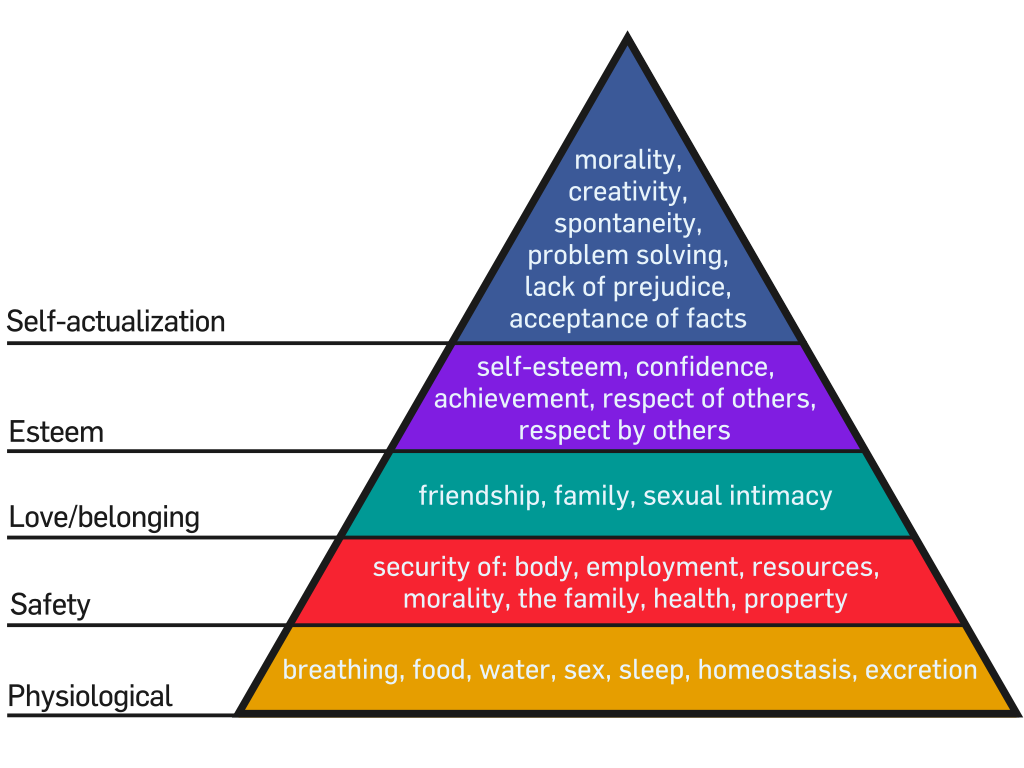
When writing YA characters it's important to keep the characters' goals and wants in mind, but recognize how severely society (or whatever the situation of your story might be) will impact them.  It seems that often we ignore our own wants in pursuit of our goals.  One must also keep needs (a separate category entirely) in mind.  In my upcoming novel School of Deaths, Suzie's primary goal for much of the novel is to go home.  Yet she soon finds herself in situations where other needs take precedent.  Safety is a basic need, and when Suzie's safety is threatened, going home becomes a want, while finding safety becomes her current goal.  Maslow's famous "hierarchy" works just as well for fiction as it does for life, with needs on the bottom of the chart needing to be met first:

Maslow's Hierarchy

   
Goals will shift in a novel and in life.  To return to the question of what to do when you grow up, I've now noticed that students will answer differently depending on who they are with.  The answer they give me when alone will be different than if a parent is standing there, and different again if in front of their friends.  This isn't necessarily deceptive, since a child's goals for one group might be different for another.  This too should be kept in mind when developing a YA character.  The goals they relate, and even believe in, are dependent on their circumstance and situation, yet should remain consistent nonetheless.  This is a simplification of life.  It is expected in fiction, but in life doesn't always follow.  For example, Suzanne Collins' character Katniss has several goals throughout the Hunger Games novels, yet the goals almost always relate to protection (protect her sister, protect herself, and eventually protect society itself from a corrupt government).  Katniss is a strong character because her goals remain consistent.  Do actual teens remain consistent in their goals or wants?  Often the answer is an absolute no.  If that is the case, perhaps fiction is one way even our authors are trying to encourage kids to stick with one goal, and one path.  I don't agree with it in life, yet I find myself drawn to the same conventions in my writing.  I like my characters to stay strong, and to remain consistent with the types of goals and wants they pursue.

To avoid having a character desire the same goal in every situation (something no true teen would do), I think it's helpful to write out a separate goal sheet for each character and break it into circumstances.  Roald Dahl's Matilda for instance has a very different goal in mind when dealing with Trunchbull than she does with Ms Honey, and a separate goal set again when dealing with her parents.  When teaching acting we focus on objectives and superobjectives that a character has in every scene.  Goals and wants are not much different, the one important detail to remember with kids is that they're rarely truly sure.  In a sense kids are trying goals as they mature.  Ones that work are kept, ones that don't are abandoned.  The closer a goal is to the kids' wants or basic needs, the more passionately they'll pursue the goal, and the more a goal is instilled from an external source, the more likely they are to abandon it at some point.  

With that in mind, back to my next goal: more writing!      

Sunday, February 9, 2014

Time


This post is geared mostly towards my fellow authors who also have full-time jobs.  Time management is currently one of the biggest issues in my life, and I wonder how it affects others' writing.


A typical week:
Monday to Friday: work at school for 12+ hours/day.  Come home do lesson plans/grading, gym, watch a show of TV or spend time with my fiancee and crash.
Saturday: shop, cook for the week, wedding planning
Sunday: church, cleaning, gym, blog.

So in all that time, where's my time to write?  I've been working on edits in any "free time" I can grab.  I personally haven't written a single sentence of my next book since summer vacation 2013.  

And now we're thinking about kids after the wedding....

For February in particular, my drama program is presenting three separate productions in the next three weeks, while working on our next huge show in March.  

How do others do it?  Post below if you're a writer in a similar spot.  I wish I had time, not just for marketing, blogging, spreading the word, etc- but for honest-to-goodness pure creative drafting.  I know what I want to be writing, I just have no time to get there until the next summer break?  How about you?


Sunday, February 2, 2014

Inspiration


File:The Main House Theatre, The Maltings Theatre & Arts Centre, Berwick-upon-Tweed, March 2009.jpg
What Inspires You?

Inspiration drives nearly every major facet of my life.  I teach theatre because I find it to be one of the most inspiring forms of art.  Taking a story and bringing it to life with a group of people is amazing.  I especially love the organic nature of drama.  When my play Stuck was performed, I had envisioned the entire work while I wrote it.  I knew what (I thought) it would look like from start to end.  The finished play was drastically different, but that was good, since so many different ideas were involved in creating a new and interesting piece of art.  I do enjoy working with kids too.  Children have the power to inspire me, and inspiring them is something I aim to daily (occasionally with some success).


I am marrying my soul mate, because every time I see or even think of her, I feel inspired.  After dating unsuccessfully, and beginning to feel a bit like a character from a sticom (my summer drama students like to call me Ted Mosby), I was wondering if I'd ever find love.  When I first saw Rachel, I was coming down an escalator.  We'd arranged a date over the internet, but I only had pictures to go off.  My initial reaction was "please let that be her- she's stunning," and it was.  Every time I am with Rachel, I no longer feel writer's block or unmotivated, I feel inspired.  She is also a writer, and has encouraged me to continue being my best.  I look forward to the day when we can do book tours together.

With Rachel at the Huntington Botanical Gardens, California
I write out of a desire to share my inspiration in words.  There are times I have definitely felt blocked.  The first novel I wrote (currently shelved, awaiting the day I try a compete re-write) took me just over ten years, and even then it wasn't right.  I vacillated from periods when the words poured out without effort, to days when I'd dig into my soul with a pair of tweezers, yanking each word out forcibly.  At times when inspiration slows, I have found travel and nature to be my chief sources for reigniting my inspiration.

Barras Nose - taken from Tintagel Castle, Cornwall
My time abroad was undoubtedly some of the most inspiring memories of my life.  When I was accidentally stranded overnight in Tintagel (http://poetsfire.blogspot.com/2011/10/travel-to-tintagel.html) I climbed out to the edge of Barras Nose the following morning, fighting the fierce winds, and watched the sunrise from the edge of the cliffs.  It was breathtaking.

Sunset over Rome, from Piazza del Popolo
Living abroad was exhilarating: a week in Rome with Rachel; visiting the ruins of medieval abbeys in England; traveling to new and exciting places every week.  I did this all while working on the first draft of School of Deaths, and it definitely helped inspire the writing.  The location of the College of Deaths seemed to change weekly, as each week I'd visit a new and amazing place and want to set my story there (ironically, the location it ended up being set is not related to anything in that four-month period I experienced in Europe).

Glastonbury Abbey
Guy Fawkes' Day in London - 2011
Now that I am back in the States, and no longer traveling regularly, what can I do to remain inspired?  I experience moments where the words come easier.  My Winter Escape retreat two weeks ago, while brief, helped me reconnect with nature, and rekindle the spark of inspiration for my writing that was starting to wane.  Even at work, while inspired by theatre and children, there are days when I am in school so long I do not see the sun (I drive to and from work, which is a windowless building, in the night).  How do I keep my writing inspired at times like that?

For me, meditation has been one answer.  It helps me remain focused.  Making sure I revisit natural places regularly, even if it's a simple walk outside, also helps.  Spending time away from work and other stresses also helps me remain inspired.

Perhaps the key is actually recognizing inspiration.  Anything can inspire us if we let it, from the news, to a "conversation" over twitter.

Perhaps inspiration isn't the act of journeying in search of a muse, it's the act of recognizing the muse in ourselves.  Several years ago, I read Julia Cameron's excellent book The Artist's Way, which focuses on methods to reclaim your own muse.  Shortly after reading it, I found myself recognizing inspiration in daily life.  Stress can be a fog, but the light of inspiration is always there, once we look past the fog.

Again, I ask:
What Inspires You?

Sunday, January 5, 2014

Blog Hop- Writing Process

As mentioned in my last post, I am joining a blog hop from KC Sprayberry.

This blog hop focuses on the writing process.  I will post the questions, and then my answers, here.

1) What am I working on?

My focus right now is on two things.  First, I am editing my first novel "School of Deaths," which will be released by Muse It Up Publishing later this year.  When I first signed my contract with MIU I was thrilled, and honestly believed my work was mostly over until the book release.  I have two editors assigned to me (a content editor and a line editor) as part of the process, and thought they'd be doing all the work.  I did not realize that editing was such a difficult and time-consuming process.  I spent most of my Winter Break working on my very first round of edits.  While my editor finds things for me to work on, I am the one who needs to make most of the changes.  I found the work extremely tedious, and it took my focus away from any creative writing (new work) I wanted to focus on, yet it is an important element in the publishing of my novel.  


My other focus is to continue the story of "School of Deaths."  I am currently working on a sequel, called "Sword of Deaths".  Here too, mixed preconceptions affected my process.  When I finished the manuscript of "School of Deaths," I started submitting it as a stand-alone novel, but knew in my heart that I wanted to write more about the same characters and world.  Their stories weren't quite finished in my mind.  I started "Sword of Deaths" almost immediately, diving back into a world where children are forced to train as Grim Reapers.

Yet, as the (also tedious) process of querying began, I realized there was a good chance that my novel would not get picked up.  Early in writing "Sword of Deaths" (the sequel) I became disillusioned.  Why was I bothering with a sequel, when my first novel would probably sit in an unused part of my computer, collecting digital dust.  With that thought in mind, I started two other books. At first I started writing an adult historical fiction novel, and then simultaneously began an adult Science Fiction novel.  Now that "School of Deaths" is being released, I have returned my attention to its sequel, and will return to the other two after the series is complete.  

2) How does my work differ from others of its genre?

Old Bodelian, Oxford
I began "School of Deaths" while living in Oxford.  Many of my favorite authors, including J.R.R. Tolkien, C.S. Lewis, and Philip Pullman had all written from there.  Surrounded by beautiful Gothic buildings, many of which were used in the film versions of the Harry Potter series, it was hard at first not to create another Hogwarts.  Yet, I did not want to copy.  I focused on my own experiences as an American living in a foreign country.  I didn't know anyone, and although I spoke the language (for the most part), I felt alone.  This was my inspiration for Suzie Sarnio, a girl training to become the first female Death.  She is the only girl in a world entirely inhabited by men.  This opened the way to explore both themes of isolation and sexism.


School of Deaths" is a unique blend of ancient imagery (Death and the Grim Reaper) with personal experience.  As a teacher, I also have an excellent insight into the mind of children who are the ages of my characters and my intended audience.  While teaching middle school last year, I asked one of my students who was Suzie's age to read the novel before I submitted it, and I used her feedback to help make Suzie as realistic as possible.

3) Why do I write what I do?

The simple answer to this question is because it's my passion.  My two great loves are for theatre and writing, both of which I pursue professionally.  I write Young Adult fantasy because it was always one of my favorite genres to read.  I work with kids daily, and in many ways their world is my world.  When I was a child, I was lonely, and escaping into fantasy worlds was one way I remained happy.  I'd imagine rich, complex kingdoms filled with mythical creatures.  This imagination continues to inspire my writing today.

In college, I studied religion and mythology (it was my undergraduate minor).  Now, I try to blend imagination, elements of mythology, and personal experience together into my YA novels.  I write to share ideas, but also to encourage the students I work with.  Reading is unfortunately on the decline as an activity kids enjoy.  I really hope to change that, by writing works that they (and their parents) will enjoy.

4) How does my writing process work?


Glastonbury Tor
I'd like to claim it's easy.  That I get an idea, sit down, and an hour later, there's a novel ready to read.  Of course, that's far from the truth.  Now that I am a full-time teacher, teaching a massive theatre program (I am almost always the first person to arrive at school and the last to leave), I struggle to make the time I need.  It is an uphill journey, not unlike my trip up Glastonbury Tor two years ago.  "School of Deaths" took just over a year from conception to finished draft.  Once I have an idea (girl trains to be female Death), I then sketch out a very brief outline- usually no more than a few pages, which states some of the major events I want to happen.  I also may mention some important characters.

By this point, the book exists more in my mind, like a movie trailer.  I have certain scenes that start to come life in my imagination, which may or may not end up in the actual manuscript.  I then start at the beginning and just write.  While in Oxford, I had enough free time to set word goals.  My first goal was to write 2000 words a week.  Now I use goals in the summer months, but not during the school year.  When writing the first draft I do not proofread as I go.  I don't stop for corrections, and try not to reread anything I've written.  It took me about six months to hammer out the first draft.  I then let it sit, without looking at my work for a month, before going back and reading the entire manuscript.  I write a second draft methodically, correcting from beginning to end.   The third draft is more sporadic, reading, correcting, and jumping around a lot.  By the third draft, I'd changed where the book actually starts, deleted a character for simplicity, and made sure the entire novel worked.  I then showed it to Rachel, another friend, and an online review group (of strangers).  I used their comments to change the book a final time, and then showed it to my student (mentioned above) before submitting to publishers.  Now, I've entered a new phase of editing, and am also thinking about the final stage in a novel: marketing.

-----------------------------------------------------------------------------------------------------------
The Blog Hop Continues:

Check out these authors, continuing the Blog Hop (their posts go up next week):

MARGARET FIELAND
Website: http://www.margaretfieland.com
blog: http://www.margaretfieland.com/blog1

bio: Born and raised in Manhattan, I have lived in the Boston area since just after the blizzard of 1978, thus missing the opportunity to abandon my car in a snowbank and walk home. I am the daughter of a painter and the mother of three grown sons. An avid science fiction fan, I selected Robert A. Heinlein's "Farmer in the Sky" for my tenth birthday, now long past. I live outside of Boston with my partner and a large number of dogs. I am the author of three published science fiction novels and two books of poetry.

-----

ELLE DRUSKIN
Website/blog:http://www.elledruskin.com/

Bio: Born and bred in New Jersey, Elle Druskin is the original Jersey Girl. Jersey might be just a quick hop over the Hudson River to New York but there’s something different about Jersey people. Could be the toxic fumes. Or the Jersey Shore. Or a Jersey claim to fame as The Diner State. Whatever it is, there’s something different about the place.  Having traveled the world and lived in Australia and Israel, Elle still says there’s no place like Jersey. Her Liberty Heights series is a love letter to growing up in the Garden State where life is a little—okay—more than a little—offbeat.

-----

SARA TOWNSEND

blog: http://sayssara.wordpress.com.

Bio: Sara Jayne Townsend is a UK-based writer of crime and horror fiction.  Her stories invariably feature someone suffering a horrible death.  She lives near London with her guitarist husband and two cats.  The latest book in her series about amateur sleuth and Canadian actress Shara Summers is being published by MuseItUp Publishing in late 2014.  Learn more about Sara and her writing at http://sarajaynetownsend.weebly.com

Sunday, November 17, 2013

YA # 2 - Crises


In my second YA "Author" blog- I talk about crises, and how students' deal with them.  I do invite new readers to check some of my older blog entries, including my travel blog entries.


Today Rachel and I visited a holiday ice sculpture exhibit.  The manger scene is pictured above.  The entire exhibit was 8 degrees below Fahrenheit, and we were given parkas to borrow as part of our entry fee.  Ice needs help staying cool.  Many times, kids don't.  The more I work with children, the more I am amazed at their ability to stay calm in any crisis.

Students have a lot to deal with on a daily basis.  With school, family, after-school jobs, and other stresses constantly mounting, there is a real and valid question about what makes a "crisis".  In my last entry I noted how sometimes immature students seemed to have a "crisis" every week.  Yet, like all authors, when I start to picture my protagonist, I know that in order for the story to be interesting, she has to face some truly life-altering crises.  In my upcoming novel School of Deaths, Suzie is forced out of her home, physically assaulted, and suffers endless trials in a new environment where she is the only girl.  She encounters crises that many adults, including myself, would find totally overwhelming, but she often remains calm, at least on the surface.  This is what I've seen in my own students time and time again.

I've watched students as their parents got divorced.  I've seen students who lost a sibling to suicide.  For three years I taught in the homes of students too sick to attend school, many with terminal illnesses.  It was almost always the families who suffered the most, while the student approached their remaining time with a simple calm acknowledgement that this was their life.

This isn't to say that I haven't seen flare ups.  I have.  I've seen anger and frustration, and of course, I am just one teacher- and don't see everything that goes on in a students' life.  However, as I watch students today, in our media-soaked world, I wonder about how they process trauma and how they deal with it at all.

The most poignant and terrifying example of crisis I've seen and experienced occurred about two months ago.  As a teacher, in the back of my mind, far in the depths of that little unconscious area I don't want to acknowledge, are the realizations that events like Columbine, Sandy Hook, and dozens of other school shootings are both a reality and a daily possibility.

I was in a rehearsal for our musical.  I was in charge of a dozen students in my classroom, and an additional 50 students who were working in the auditorium and the outside area behind the theatre.  It was our first day using any space outside, since we wanted platforms to dry in the sun.  I was in my classroom with the cast.

A student burst into my room, one of my kids from the auditorium, and said "Mr. M, there's a gun threat outside."  I instantly put my dozen kid into lockdown mode, then with my heart pounding I ran to the auditorium.  They'd already closed the outside door, so we quickly locked down the remaining ten doors, and I sat huddled with the students on a ramp, not knowing what was going on for fifteen minutes.  Most frightening of all was the knowledge that a dozen other kids were huddled in the darkened and locked back of my classroom.  As we sat here huddled in silence, someone started banging on one of the auditorium doors.  Every bang made my heart skip a beat.  Finally the banging stopped.  After the fifteen minutes, a janitor came in and told us it was over.  It was without a doubt the most frightening experience of my life.

We found out after the event that a girl had called her boyfriend (not a student) to come and shoot some of the members of the football team.  Whether or not there was ever an actual gun is still unclear (the authorities deny it), though I have five unrelated students in sports clubs who say that they saw one.  The sports teams all evacuated, and we went into lockdown, but the suspects fled.  I still do not know who banged on the auditorium doors.

Half an hour after this event had ended, I had a scheduled "drama parents' night".  It was a meeting to gain more support for parents in Drama.  I was a mess.  I was shaking, could barely talk, and had just got off the phone with Rachel (my fiancee).  I had been so scared.  It was my students who really stood out.  During the event they remained completely calm.  After it was over, they were laughing and smiling, as if nothing at all had happened.  I asked one girl how she could be so calm, and she said "It's over now- what's the point of thinking about it?  I just want some pizza."

That remark seemed so out of place at the time, yet to a teenager who can shoot strangers every night in video games, or watch the news about yet another actual shooting, maybe "crisis" means something different than it does to an adult....