Last Friday, I finished my galley review and sent it to the publisher. The very next day, my book went live on MuseItUp's website, now available for pre-order.
Thirteen-year-old Suzie Sarnio always believed the Grim Reaper was a fairy tale image of a skeleton with a scythe.
Now, forced to enter the College of Deaths, she finds herself training to bring souls from the Living World to the Hereafter. The task is demanding enough, but as the only female in the all-male College, she quickly becomes a target. Attacked by both classmates and strangers, Suzie is alone in a world where even her teachers want her to fail.Caught in the middle of a plot to overthrow the World of Deaths, Suzie must uncover the reason she’s been brought there: the first female Death in a million years.
Please click here to read a sample section, or to pre-order.
Also visit my main site www.ChristopherMannino.com for extras and more information.
Monday, March 31, 2014
Monday, March 24, 2014
Santa Muerte
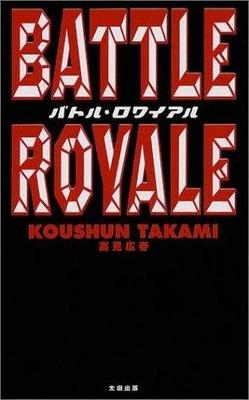
One concern every artist has at some point is on originality. No one wants to copy another's ideas. I remember reading an article about how Suzanne Collins received criticism when The Hunger Games was released, claiming that she had copied the idea from a previously released Japanese manga story called Battle Royale. Apparently the two stories had almost identical plots, and much of the imagery was repeated between the two concepts. Collins denied ever hearing about Battle Royale before her publication.
Authors, and indeed all artists, begin a creative process. They may be influenced by other ideas, but no one (unless writing "fan fiction") wants to copy someone else's world. When I was writing School of Deaths, I honestly believed that the idea of a female Death was completely original. The reason I made her female, as discussed in previous posts, was to increase her isolation. My original concept was simply a school that trained reapers. Although I had never read or experienced either, both ideas exist independently of my novel.
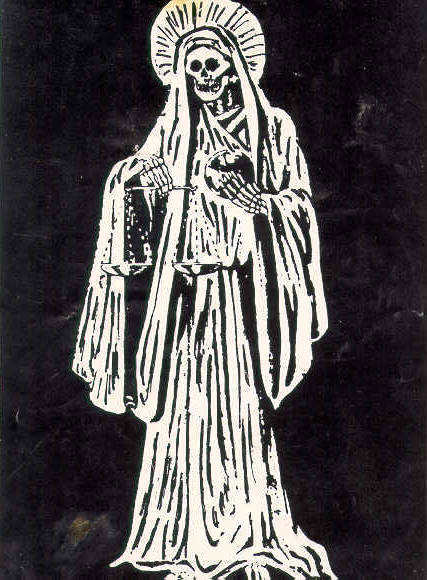
I learned last week about Santa Muerte. The idea of a female Death actually dates to the 1700s, when Catholic traditions in South America blended with meso-American cultures to produce a folk saint "Our Lady of Death" or "Saint Death". Santa Muerte is a female Grim Reaper. Unlike Suzie, she is not a kid, and does not train to be a Death. In fact, she is essentially the same as the traditional image of the Grim Reaper, only female.
I first learned about Santa Muerte as part of a report on illegal drug trades in Mexico. This is the most depressing revelation of all. Suzie Sarnio is a female Death who represents hope to young people. She overcomes sexism, and becomes a leader in a world where she's hated. Santa Muerte, perhaps the earliest imagery of a female Death, has associations with every negative aspect I wished to avoid.
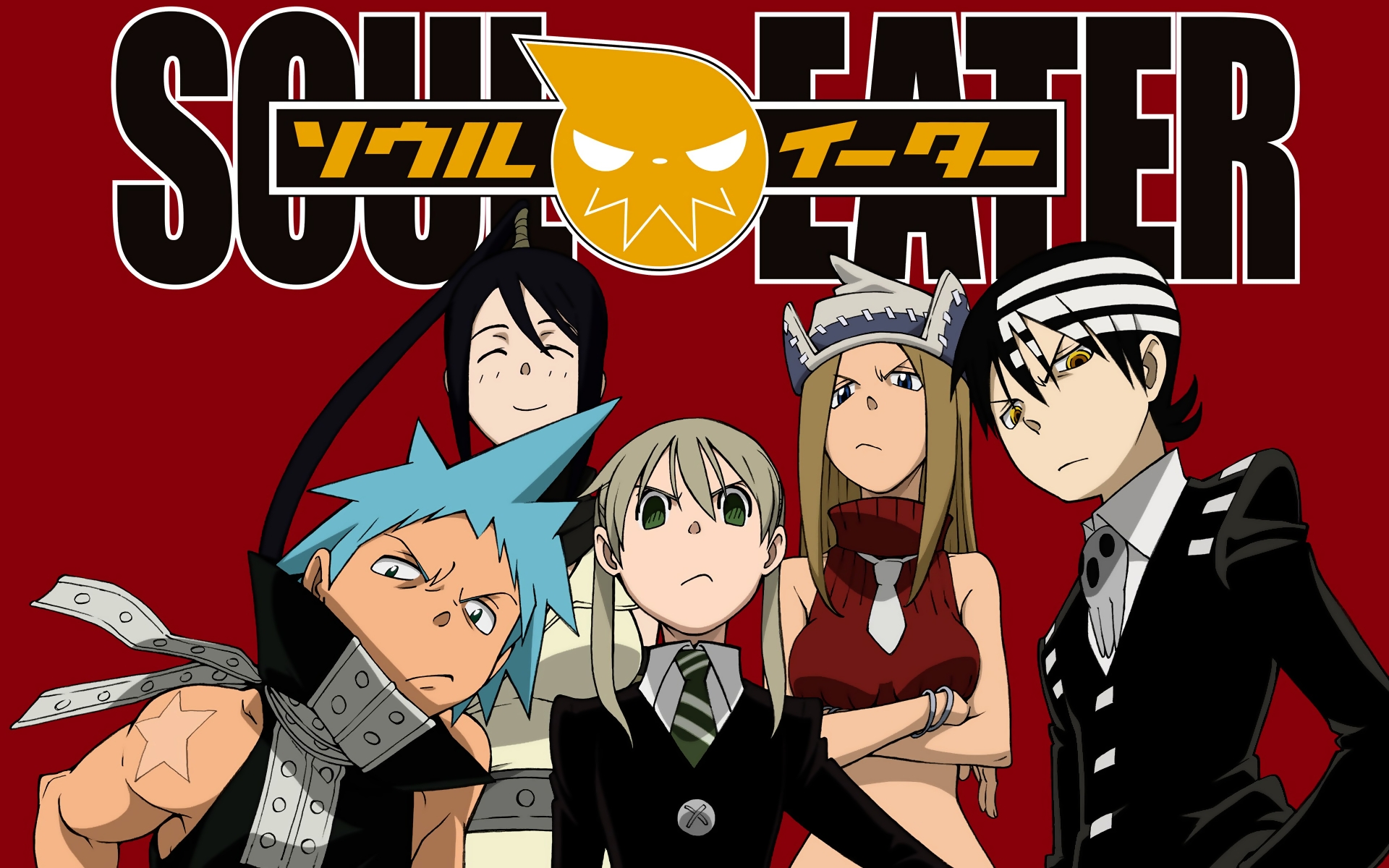
At the same time, even my School of Deaths, where Deaths are trained, has echoes of other ideas. Last summer, long after the novel was finished and the publishing contract signed, I learned about a Japanese manga series called Soul Eater. I watched the entire series, which is markedly different than my novel, but at its base does feature kids training to be Reapers.
I now had to ask the question, is anything original? I developed my ideas on my own, and the story itself is unique, but the themes all exist elsewhere- some dating back centuries. Joseph Campbell is famous for postulating that all ideas emerge from a single "monomyth" deeply rooted in human consciousness. If every story is in some ways a retelling of the same central ideas, where does originality factor in?
The answer, I believe, is in the construction of a novel, which is the true art. I am currently reviewing my final galley version for School of Deaths, and have been writing a second novel as well. Now that I've discovered that similar ideas exist elsewhere, am I changing mine? No. The novel I've written is still an original work, the character and their situations completely unlike anything I've ever experienced or heard of elsewhere. Perhaps, at the base of our souls, there really is a single complex of "monomyths" from which all stories emerge. Yet, it's the way we interpret and transform those myths that truly makes us artists.
Monday, March 17, 2014
Chutes and Ladders: Part Two
In my last post, I discussed the role of chance in our everyday lives. Today, I look at the role of chance in writing.
Today is St. Patrick's day. I remember as a kid, looking through our yard for a four-leaf clover. I never found it. When I was in kindergarten, my mother pointed to a rainbow in the sky, and told my brother and I that we'd go look for the pot of the gold at it's end. We jumped in the car, full of excitement, but never seemed to catch the end of that magical arc of colors. How many people look for a little token of control- something to change the roll of fate's dice in their lives, and reduce the amount of chance?
However, whether you believe entirely in chance or not, there's one arena where chance needs to be both absent and always-present: fiction. Perhaps the only place where there is no chance, no fate, and no luck at all is within the world of fiction. Getting published, or making lots of sales- that's a different matter. I'm referring to the world of the novel itself.
Like most authors, I started my novel with an abstract idea. This led to a rough outline, then a first, second, and third draft... eventually to line edits, content edits, and currently a galley review. There isn't a word in my novel that's in there by chance. There's not a single thought that hasn't been evaluated and studied, not just by me, but by my early readers, my editors, and my publisher. This novel, and indeed all novels, is meticulously planned out. However, it still needs to give the illusion of chance. I need my readers to believe that some of the events happening to the characters are random. If you want a storm to blow over your setting, for example, that storm needs to appear from nowhere. Or perhaps a character dies randomly- it happens in both real life and fiction, the difference is that fiction only appears random.
The method employed by Donwton works well in fiction as well. Engage the audience's attention thoroughly in the opposite direction you intend to take them. Then throw your curveball. If you truly want an event to seem random, avoid foreshadowing it, or keep foreshadowing to a minimum. You, the author, know what's around the corner, but you want the reader staring staring straight down the road. That way, when your plot twist comes leaping out, the reader is blindsided and thinks its purely chance. Keep in mind, however, that not every event is chance, even in your novel. Just like in reality, if there's an internal choice, it still should follow the character's rationale.
That's my thoughts on chance. I also have some major news for my novel. The cover is out, and I have a release date of May 2nd.
In preparation for this release, I have written a short story set two years before the novel. SHADOW OF THE SCYTHE- the story of a French boy brought to the World of Deaths. Download a FREE copy of Shadow of the Scythe at my website: http://www.christophermannino.com/free-reads.html
That's my thoughts on chance. I also have some major news for my novel. The cover is out, and I have a release date of May 2nd.
In preparation for this release, I have written a short story set two years before the novel. SHADOW OF THE SCYTHE- the story of a French boy brought to the World of Deaths. Download a FREE copy of Shadow of the Scythe at my website: http://www.christophermannino.com/free-reads.html
On a final note, if you enjoy chance- you now have an exciting chance to win a FREE copy of my upcoming novel School of Deaths (the full novel). This sweepstakes runs through April 1st.
Monday, March 10, 2014
Chutes and Ladders: Part One
There's a game my brother and I used to play as kids, called the Game of Life.
In this game, you spin a dial to determine how quickly you progress through certain life phases, such as college, marriage, and childrearing. I haven't played it since I was about seven, and honestly don't remember the game too much, but it brings to mind a serious question: how much of life is purely chance. In the end, is there some sort of cosmic force spinning a dial, or do we really determine our own fates. This blog post on the element of chance will come in two parts (over two weeks), and this part will focus on chance in life.
I really began thinking of chance recently, after listening to an NPR study on how chance affects art.
The story can be heard here:
http://www.npr.org/2014/02/27/282939233/good-art-is-popular-because-its-good-right
Ultimately, the idea discussed is that art popularity (including writing) may be governed in very large part by chance and coincidence. For a writer, this is discouraging. Yet, I started to wonder. Is art the only element affected by chance, or is life itself an enormous roll of the dice? I've never been too sure of fate or destiny, but is the opposite possible?
This past summer, I played the game Chutes and Ladders with a camp student I was working with. It was the first time I'd played as an adult. My initial reaction was this game is utterly stupid. I mean, really, I'm rolling a die, and don't make a single choice. The die roll decides if I climb a ladder of success or come tumbling down a chute of despair. I peddle along this path, experiencing life's greatest joys and sorrows without any semblance of control, and at the end someone wins. Is that all life's about??
And yet, what if life really is entirely up to chance? Sometimes lately, I've wondered. My life has mostly been joys. I've achieved all of my dreams. I'm teaching in a job I love, my first novel will be released soon, and I'm marrying my soul mate. Still, those chutes keep appearing. Rachel's cousin Courtney died last weekend. Courtney was only 17, yet died possibly from drugs. At the same time, John (mentioned last post) remains in critical condition in the hospital, and even today one of my other students was taken out of school in an ambulance.
Is there someone up above rolling a die, and pushing me across spaces on the board?
I really began thinking of chance recently, after listening to an NPR study on how chance affects art.
The story can be heard here:
http://www.npr.org/2014/02/27/282939233/good-art-is-popular-because-its-good-right
Ultimately, the idea discussed is that art popularity (including writing) may be governed in very large part by chance and coincidence. For a writer, this is discouraging. Yet, I started to wonder. Is art the only element affected by chance, or is life itself an enormous roll of the dice? I've never been too sure of fate or destiny, but is the opposite possible?
This past summer, I played the game Chutes and Ladders with a camp student I was working with. It was the first time I'd played as an adult. My initial reaction was this game is utterly stupid. I mean, really, I'm rolling a die, and don't make a single choice. The die roll decides if I climb a ladder of success or come tumbling down a chute of despair. I peddle along this path, experiencing life's greatest joys and sorrows without any semblance of control, and at the end someone wins. Is that all life's about??
And yet, what if life really is entirely up to chance? Sometimes lately, I've wondered. My life has mostly been joys. I've achieved all of my dreams. I'm teaching in a job I love, my first novel will be released soon, and I'm marrying my soul mate. Still, those chutes keep appearing. Rachel's cousin Courtney died last weekend. Courtney was only 17, yet died possibly from drugs. At the same time, John (mentioned last post) remains in critical condition in the hospital, and even today one of my other students was taken out of school in an ambulance.
Is there someone up above rolling a die, and pushing me across spaces on the board?
I believe that life is a blend of chance and choice. Yet, the truly important thing is not what happens, but how we react. Despite calamity, focusing on future joys (the "ladders" on the way) keeps us optimistic, and helps us move past the occasional disappointments. Next week, I will discuss adding chance to something deeply planned out: a novel....
Monday, March 3, 2014
Crises- Part Two
A couple months ago, I wrote about teens and dealing with crisis. The original post can be found here.
I hadn't planned to return to this subject, but last Sunday (Feb 23) I received terrible news. The worst part of being a teacher is learning that something bad has happened to a student you care about.
John is a great student. He is full of energy and enthusiasm, and always smiled. He was a leader on the school improv team, a rising leader in the drama department, and was one of two students who signed up to be a student aide for me next year. While riding his bicycle (with a helmet), John was struck by a car. He has been in three hospitals since then, and has still not regained consciousness. The latest prognosis indicates that there is a chance he might never regain full use of his arms and legs.
This tragedy has shaken my program, especially myself. In my last post I mentioned how teens sometimes dealt with crises in surprising ways, often by hiding their true feelings. This issue seems to have hit closer to home with them, and in a way the roles have been reversed. I have to channel my emotions and stay positive, while many of the students are more visibly distraught. The improv team put on a show last Thursday to help raise money for John's family. It was moving to watch.
Perhaps this crisis hurt more students because they knew John so well. Perhaps it reminds us of the fragility of life. How the students continue to deal with crises shows me how strong they are, and reminds me of how strong I must be as well.
Sunday, February 23, 2014
What's in a Name?
Like many first-time authors, I'm caught in the middle of two pulls. The excitement of landing a publishing contract and launching a writing career wrestles with the fear of remaining anonymous, the fear that none will read my novel. Though the book hasn't even been published, with a website in my name and increasing social media presence I decided to Google search myself. I was surprised.
| Who am I? |
I then started thinking less about my own name, and more about my characters. I;m not going to change my name, but every character name is completely up to me. In my first (unpublished) novel, I spent weeks and weeks agonizing over the perfect names. In my earliest drafts, characters would talk to NAME1 or NAME2, since I couldn't bear to label any of the figures permanently.
In School of Deaths, the main character was originally Billy Black. Black is a color associated with death and darkness, and I liked the alliteration. Billy is a name for a kid, a fun name. Then I switched the novel so it was told from a girl's perspective. I'm not completely sure where Suzie Sarnio emerged from as a name, perhaps a tribute to my own Italian heritage.
Sometimes naming a character appropriately can be strange. In School of Deaths, a minor character is a figure called Athanasius. Athanasius is a goat-like figure who welcomes Suzie to the College of Deaths. His eyes are yellow like a lizard's, his face and hands look like a goat. He is the first Elemental Suzie meets; the Elementals are one of the major species in my world. After naming him, I went to see an eye specialist. The doctor's name, as he greeted me, was Athanasius. As the ophthalmologist examined me, I couldn't help but envision a pair of yellow lizard eyes staring at me, and hands like a goat's....
How do you name characters?
Saturday, February 15, 2014
Wants and Goals
As Valentine's Day rolls by I turn my attention to desires.


For many years, one of my greatest wishes was to find love. Like many singles, I used to spend Valentine's Day utterly miserable, trying to ignore all my dating friends. I'd pretend I didn't see the glut of commercialized "love" shoved at everyone through TV, movies, and the internet.
I am fortunate enough to have found my soul mate. In fact, this was the best Valentine's Day I've had so far. Thanks to a snowstorm and President's Day, Rachel and I enjoyed a full 5-day weekend together. We made homemade chocolate-dipped strawberries, had dinner at one of our favorite restaurants, enjoyed an in-home couples' massage, and best of all we wrote our wedding vows. My goal of finding love has come true.
For Young Adults, both in reality and in fiction, goals and wants are not always straightforward. As an author and teacher, I think it's important to note how many kids have goals that are forced on them by parents, peers, or even society. The school where I work is a particularly strong example. Roosevelt is a science and tech magnet school for the entire county. It has a huge arts program, including the massive theatre department I run, but ultimately most of the top kids who attend the school do so to take part in the advanced science courses. It is not a vocational school, but does provide intensive internships at places such as NASA (which is a block up the street), the National Institutes of Health, the FDA and other federal research facilities around the DC area.
Every kid has at some point been asked the question "what do you want to be when you grow up?" Personally, I think it's a terrible thing to ask, especially to younger kids. Who really knows their career path as a kid? Still, it's such a cliche question, I ask it myself. Before I started teaching at Roosevelt the answers I'd hear were usually along the lines of "I dunno, maybe a lawyer." Now, I hear "I plan to specialize in bioengineering and microecology." You're fifteen, I respond in my head.
However, that's just the problem. The better I get to know my students, the more I'm realizing that they say they want one thing, but in truth have no idea. Society today has moved far away from the idea of a person going to college with one major, getting one internship or apprenticeship, and working one career until retirement. I don't actually know anyone in my generation who has done that, yet our schools are becoming more and more geared towards this antiquated ideal. Now, students are required to take large numbers of their college courses while in high school (AP Courses), they often have to apply to extremely restrictive majors, and if they don't go to college, their parents and some of their teachers will emphasize their lack of success. What are we teaching kids? We're ultimately forcing them to have goals, whether they're ready to or not.
Of course a goal is not the same as a want. Perhaps the question shouldn't be what do you want to do when you grow up, but rather what is the goal you are currently adopting for yourself. For example, one of my students came to me very upset two weeks ago. She is a strong actor, and had told me how much she wanted to keep acting, even if it was just for fun. Acting and theatre was a true want, something she desired to do. Her parents wanted her to stop acting, since the time it took was interfering with what they wished her goals to be. Her goal was to have a successful career and be happy. Ultimately, goals need to intersect with our wants to be successful.
When writing YA characters it's important to keep the characters' goals and wants in mind, but recognize how severely society (or whatever the situation of your story might be) will impact them. It seems that often we ignore our own wants in pursuit of our goals. One must also keep needs (a separate category entirely) in mind. In my upcoming novel School of Deaths, Suzie's primary goal for much of the novel is to go home. Yet she soon finds herself in situations where other needs take precedent. Safety is a basic need, and when Suzie's safety is threatened, going home becomes a want, while finding safety becomes her current goal. Maslow's famous "hierarchy" works just as well for fiction as it does for life, with needs on the bottom of the chart needing to be met first:
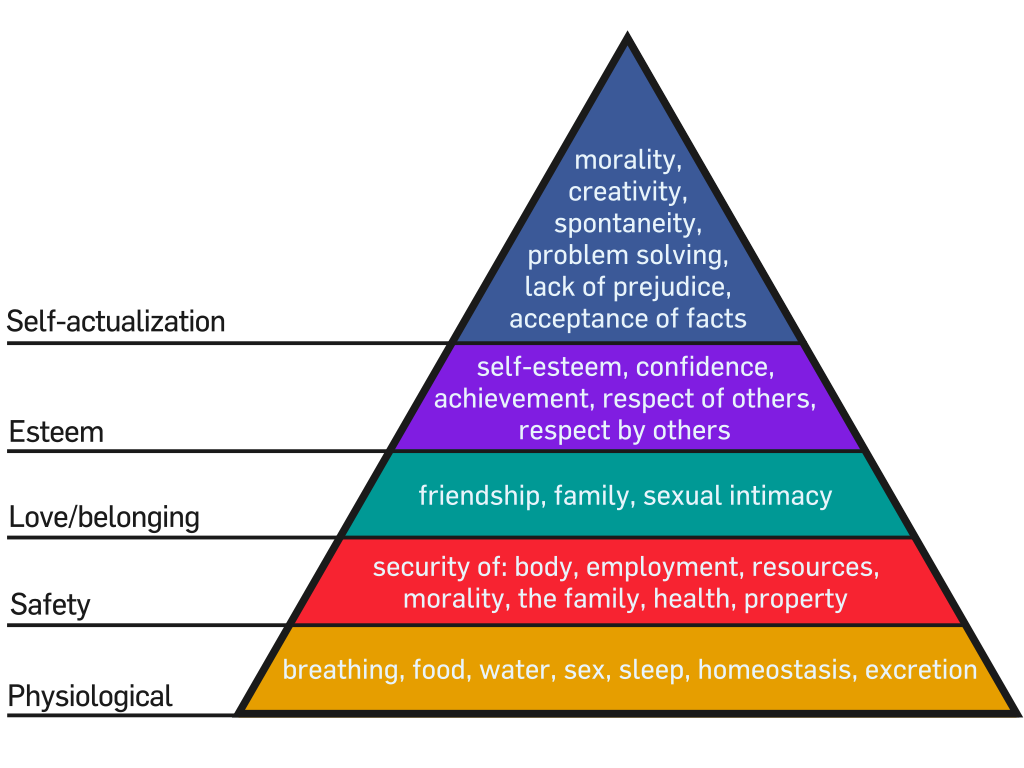
Goals will shift in a novel and in life. To return to the question of what to do when you grow up, I've now noticed that students will answer differently depending on who they are with. The answer they give me when alone will be different than if a parent is standing there, and different again if in front of their friends. This isn't necessarily deceptive, since a child's goals for one group might be different for another. This too should be kept in mind when developing a YA character. The goals they relate, and even believe in, are dependent on their circumstance and situation, yet should remain consistent nonetheless. This is a simplification of life. It is expected in fiction, but in life doesn't always follow. For example, Suzanne Collins' character Katniss has several goals throughout the Hunger Games novels, yet the goals almost always relate to protection (protect her sister, protect herself, and eventually protect society itself from a corrupt government). Katniss is a strong character because her goals remain consistent. Do actual teens remain consistent in their goals or wants? Often the answer is an absolute no. If that is the case, perhaps fiction is one way even our authors are trying to encourage kids to stick with one goal, and one path. I don't agree with it in life, yet I find myself drawn to the same conventions in my writing. I like my characters to stay strong, and to remain consistent with the types of goals and wants they pursue.
To avoid having a character desire the same goal in every situation (something no true teen would do), I think it's helpful to write out a separate goal sheet for each character and break it into circumstances. Roald Dahl's Matilda for instance has a very different goal in mind when dealing with Trunchbull than she does with Ms Honey, and a separate goal set again when dealing with her parents. When teaching acting we focus on objectives and superobjectives that a character has in every scene. Goals and wants are not much different, the one important detail to remember with kids is that they're rarely truly sure. In a sense kids are trying goals as they mature. Ones that work are kept, ones that don't are abandoned. The closer a goal is to the kids' wants or basic needs, the more passionately they'll pursue the goal, and the more a goal is instilled from an external source, the more likely they are to abandon it at some point.
With that in mind, back to my next goal: more writing!
Subscribe to:
Posts (Atom)